NPC No More
Art Direction PORTFOLIO
NPC No More started as a simple use case: writing an About Me section.
Probably the most banal professional task possible, yet a valid burden for many multidisciplinary creatives, me included. For one to self-define, one must negotiate the private mess with the outside read, the artist with the format, the artistic intention with the way the work is expected to be understood, packaged, and made useful.
So I treated this basic portfolio requirement as a small lab accident. A little Chemical X, sprinkled with Tartakovsky-esque aplomb on recycled 19th-century Linkedinian politeness.
The problem is that when it comes to artistic identity, IKEA does not have enough boxes for all the directions, niches, instincts, half-built roads, abandoned paths, and strange creative detours I would take if the process allowed it. I am, in the best and worst sense, a proud master of none. Someone who keeps exploring and exploiting the deepest nooks and crannies of his own practice, trying to pull visual and written concepts from the abstract end of the spectrum all the way into pop culture and commercial language.
Everything is built on more than ten years of digital art practice and an organic visual language developed across multiple digital mediums: digital painting, code-based glitching, digital sculpting, rendering, image manipulation, and creative storytelling. All of these inputs were turned into a strange à la carte menu and fed to a locally run AI companion, one impolitely long prompt at a time, transforming the final stage of the process into negotiation.
This can go beautifully wrong, thus proof of human.
NPC No More is loosely borrowed from game logic: the refusal to remain passive inside a prewritten script.
The project is about becoming the “main character” in a closer to agency type of sense. The moment when you stop moving through available template and begin taking over your own (artistic) needs and desires.
In my case, that action started with something almost embarrassingly banal: writing an About Me section for a portfolio.
Of course, instead of keeping it simple, I overthought it properly. I took a basic professional use case and started complicating it, translating it, abstracting it, dragging it through AI outputs, digital textures, glitch, flowers, simulation logic, more glitch and noise and my own visual language, only to bring it back down as a deliberately over-processed but honest self-branding exercise.
That is the point of the project.
NPC No More is a case study in active overthinking: taking a simple format, refusing its generic version, refusing it's antonym, and filtering it through a personal aesthetic until it becomes obvious once again. It is an overpolite reminder that nothing is perfect, least of all the attempt to explain yourself artistically without lying.
The logical thing would be to start with a win.
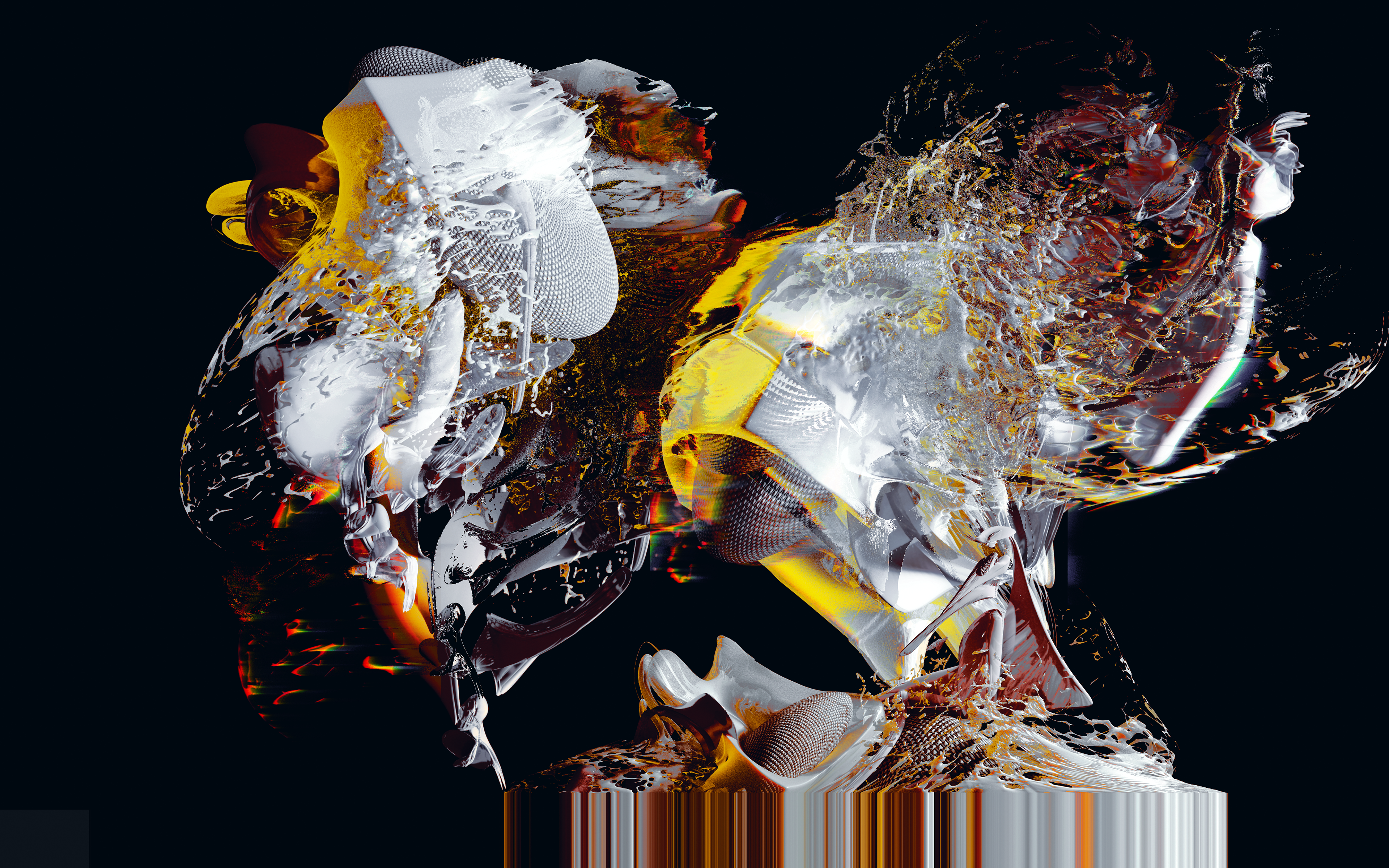
This project begins with a fragment from "Deep Fried Reality", a digital artwork sold as an NFT on the Solana blockchain and collected by @thisistolo on Exchange.art.
I am not using this piece to speed up the process or recycle old material. I am using actual work from my artistic practice to make a point: play can still be pushed into something practical.
A visual experiment, even one that starts as something abstract, excessive, or hard to explain, can become a system. It can become a use case.
That is something I rarely see enough of, and something I would like to see more often: artists and designers stepping outside the bubble of pure pragmatism and allowing themselves to play again.
The image used here is an early test render from the 3D model behind Deep Fried Reality.
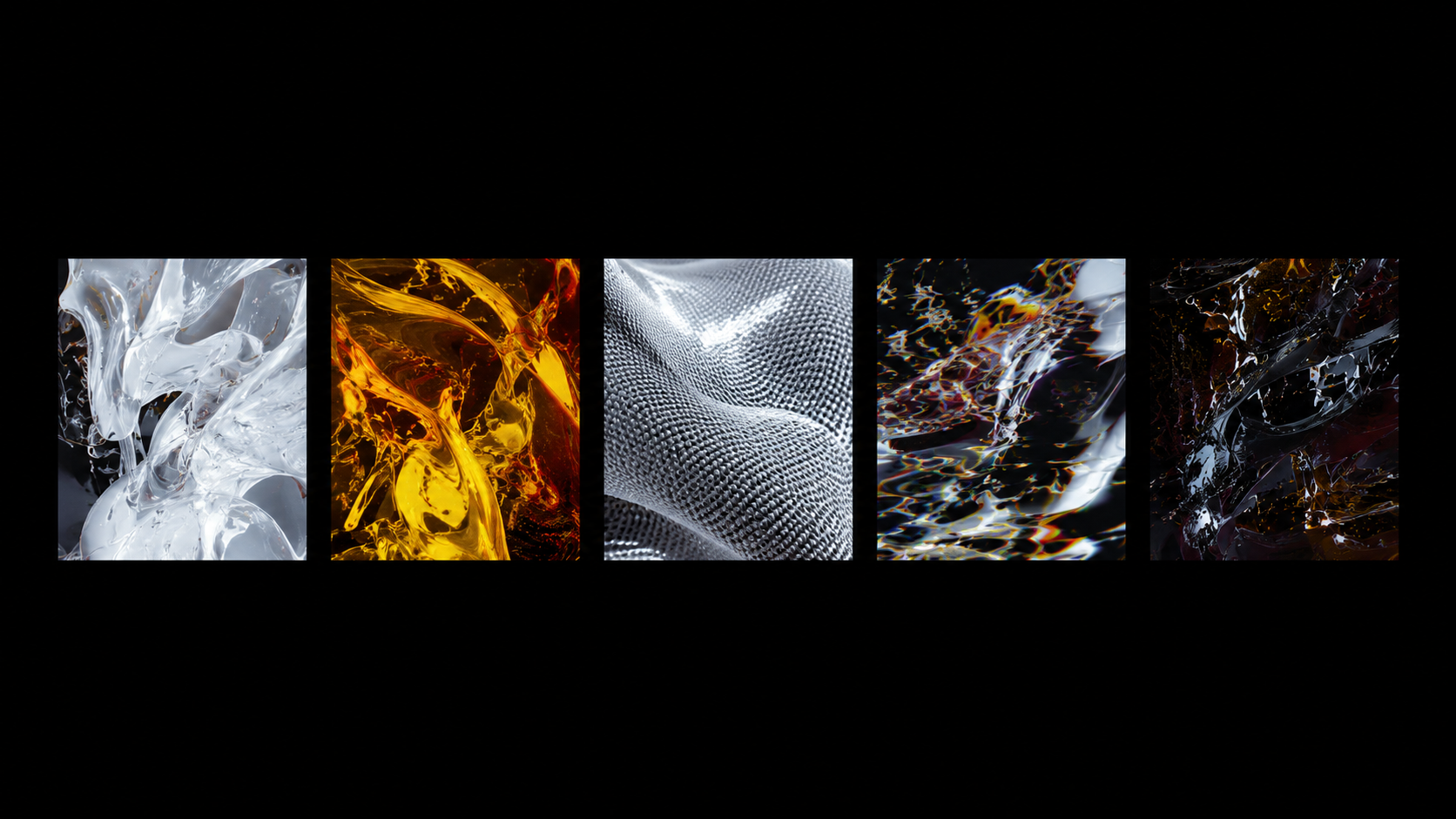
Visual synthesis of form color and texture study relevant for future prompting.
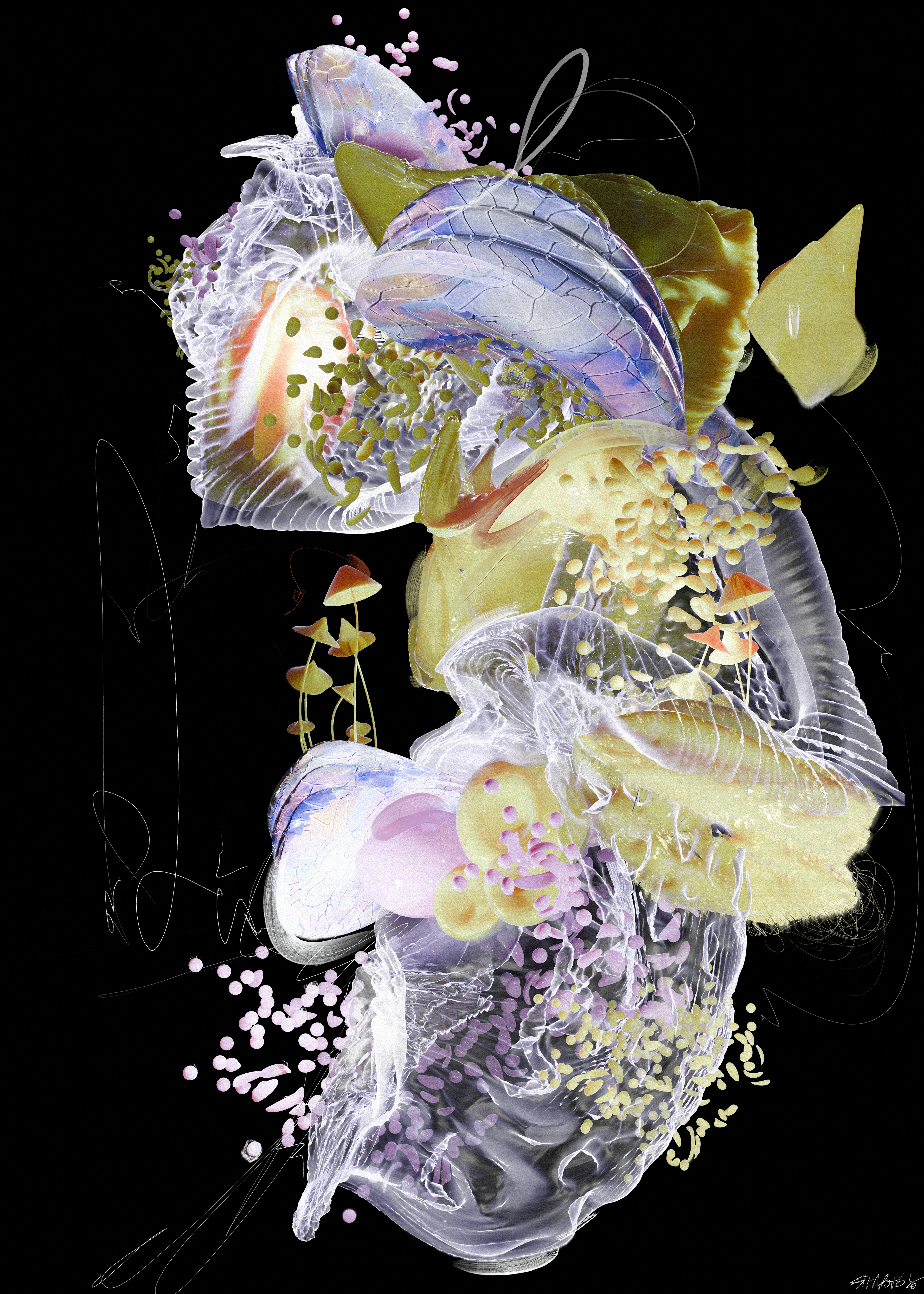
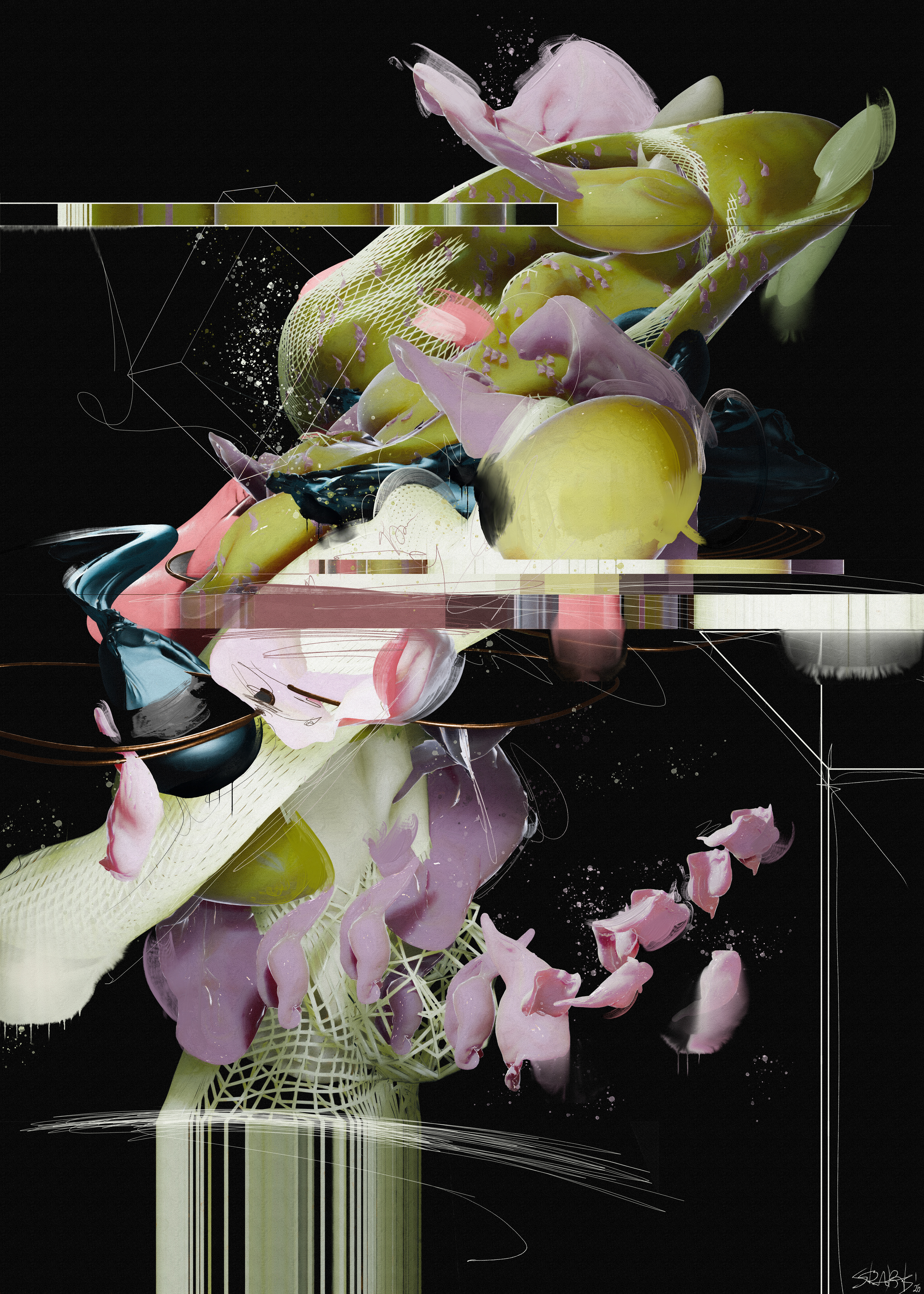
Once the main composition was sketched through what I extracted and recomposed from "Deep Fried Reality", it was time to go deeper into other uncharted territories.
This is where another body of work entered the process: a cross-chain digital art series made in 2025, focused on form, light, and what I would call the most isolated, pure, and abstract perception of the image.
Here, form does not carry a narrative, a title, or a practical purpose beyond the act of assembling living and dying inside the pixel.
Gratuitous gestures ofc.
One of these works, the one on the left, was also collected on the Solana blockchain by MQQ.
These exercises opened and expanded my direction toward the synthetic biological, or more precisely, toward the aesthetic territory where biology, digital matter, and generative interpretation start touching each other. A simple attempt to see where an artistic input of mine can go when accompanied by generative AI.
Nothing more, nothing less than proving that the study of form still makes sense in the daily practice of any creative person.
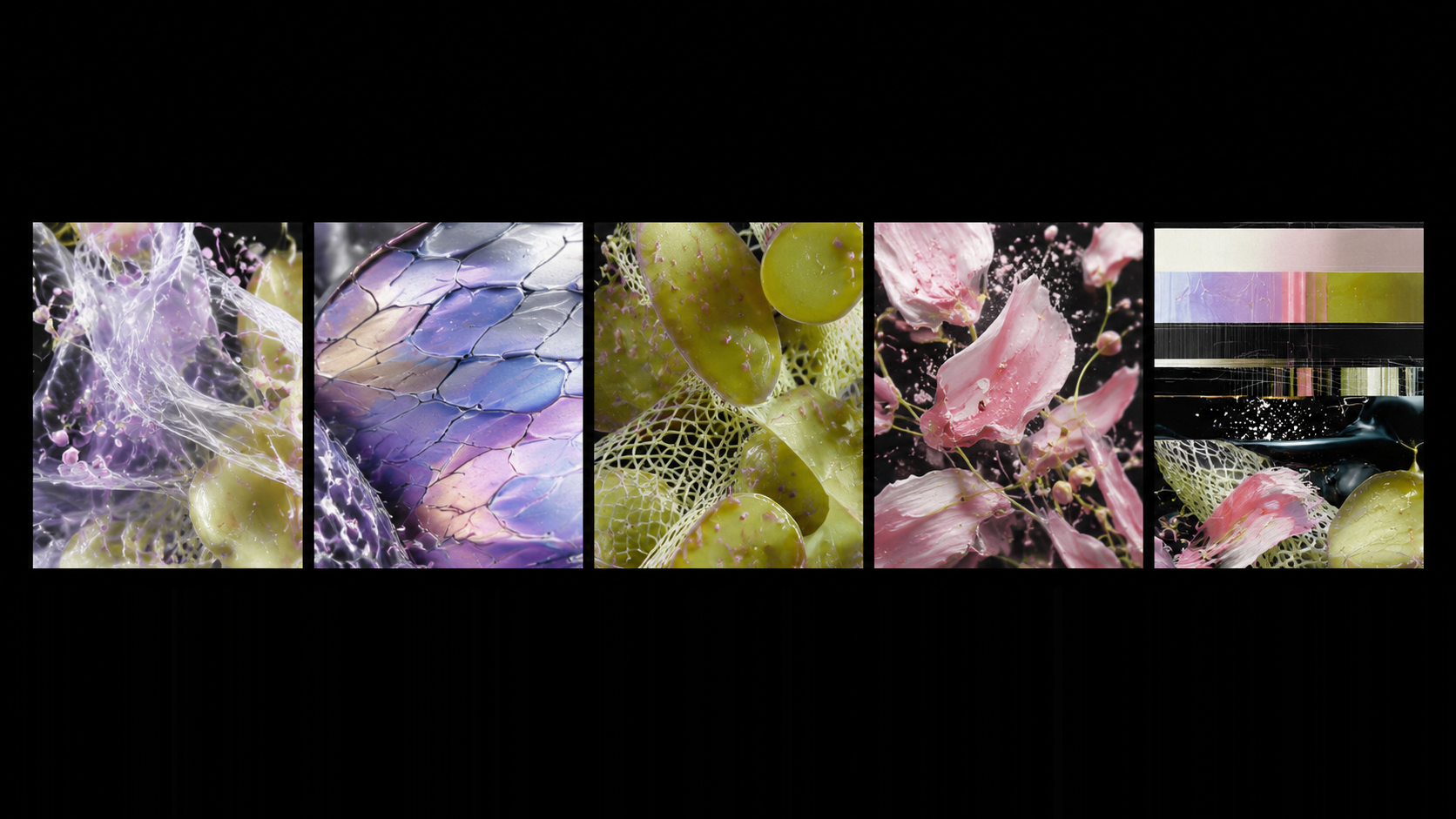
Visual synthesis of form color and texture study relevant for future prompting.
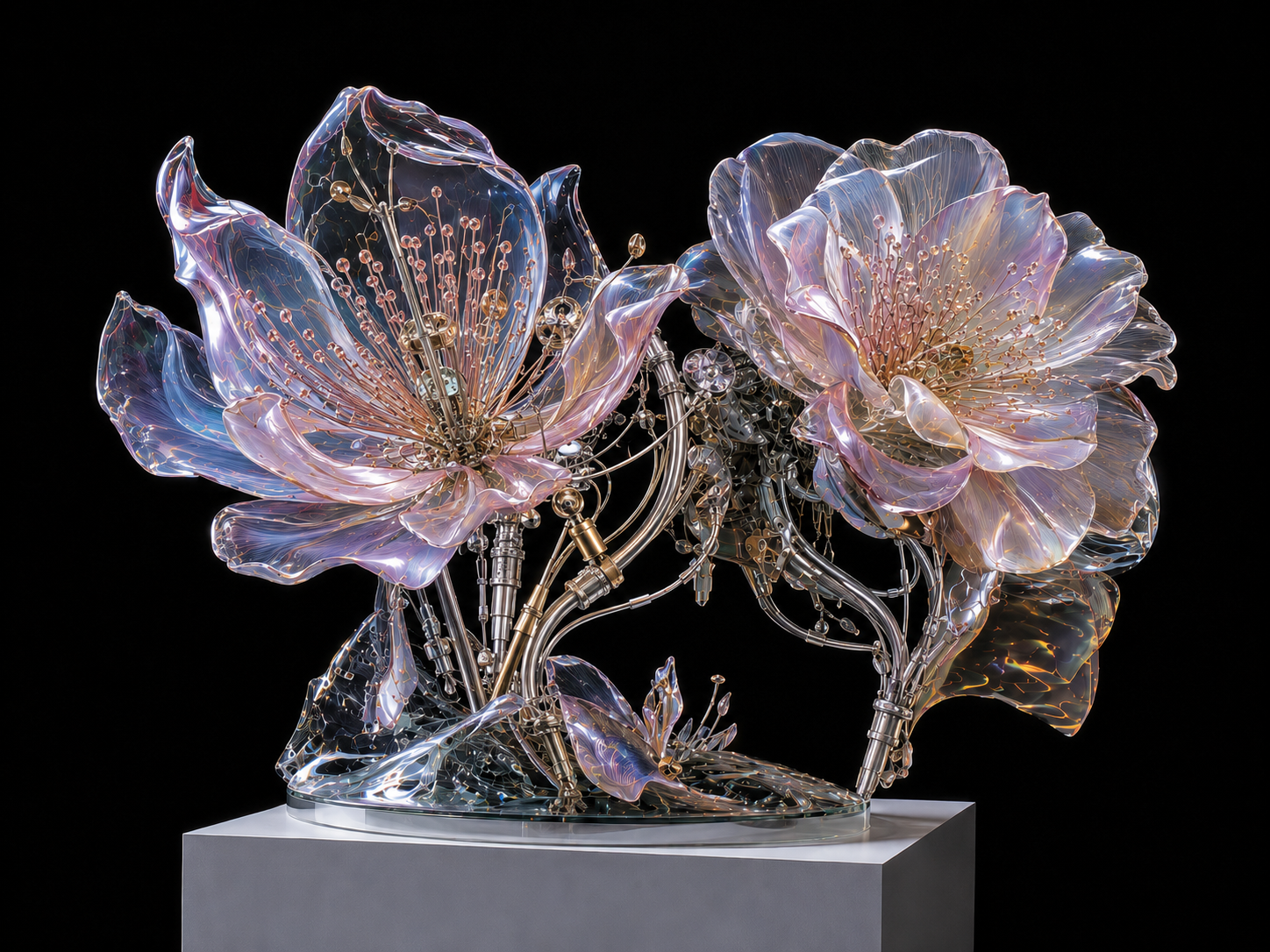
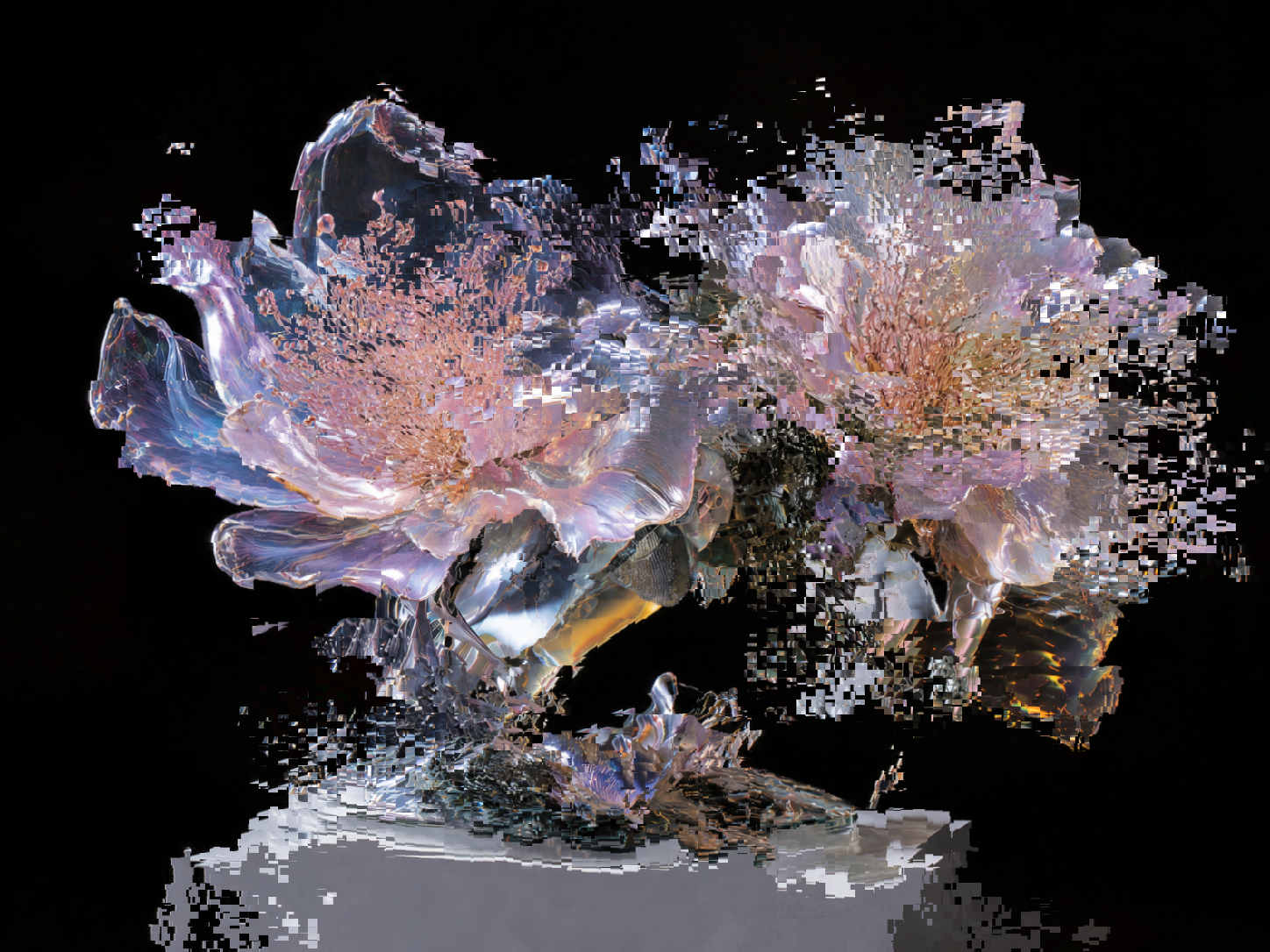
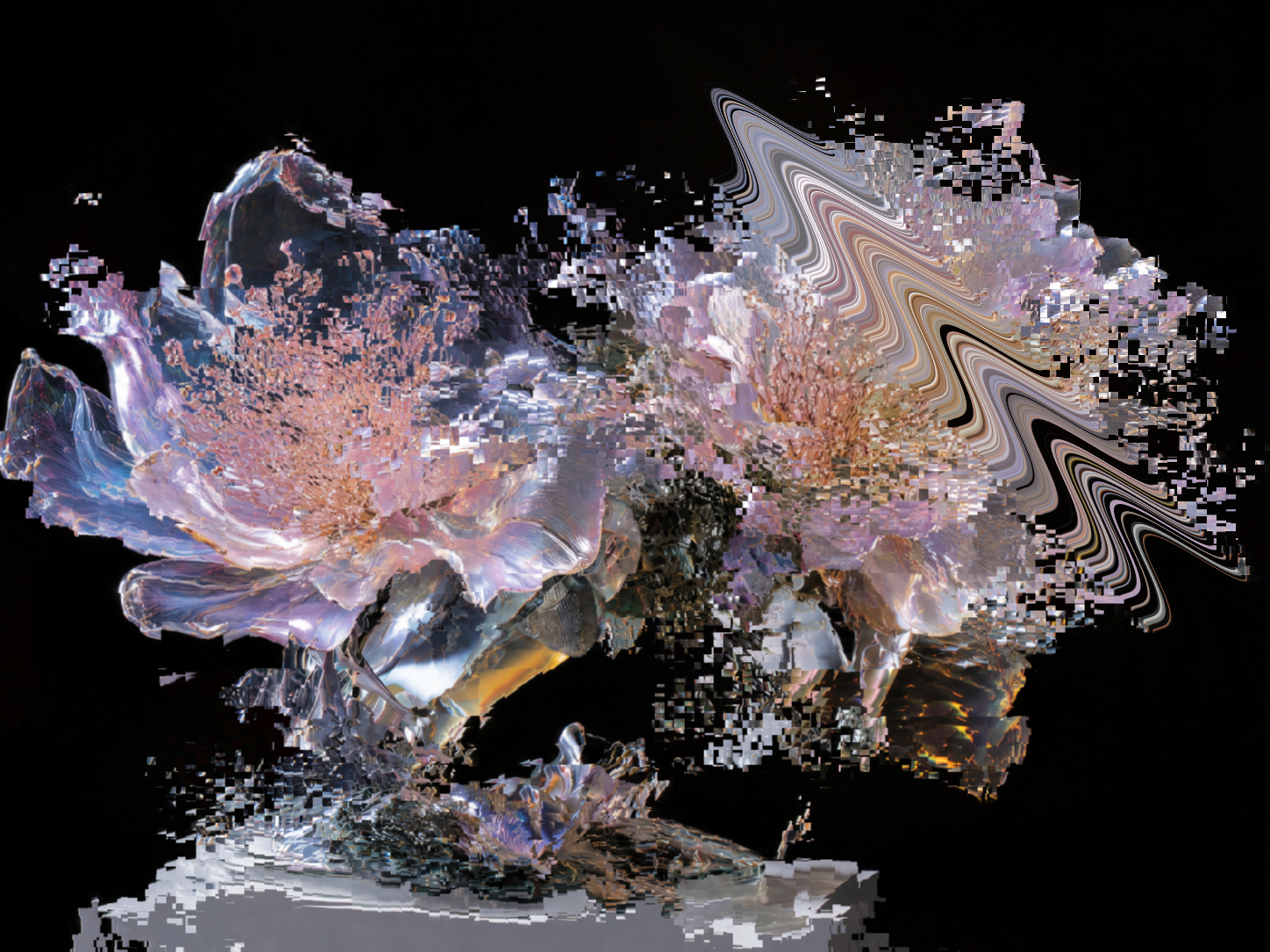
The first AI outputs are the images shown above.
They were also the most surprising part of the process, precisely because the initial prompt was intentionally loose. I was not trying to force a final image. The intention was closer to sketching: an open-ended stress test, a way to let the material respond before deciding what the project should become.
What came back was more precise than expected. The output carried traces of the source works, but did not remain trapped inside them.
Code-based glitching intervenes as a calibrated accident between AI generation and digital painting, closer to a visual haiku.`
It prevents the image from becoming overly polished, allowing rupture, misalignment, and happy accidents to act as active material.
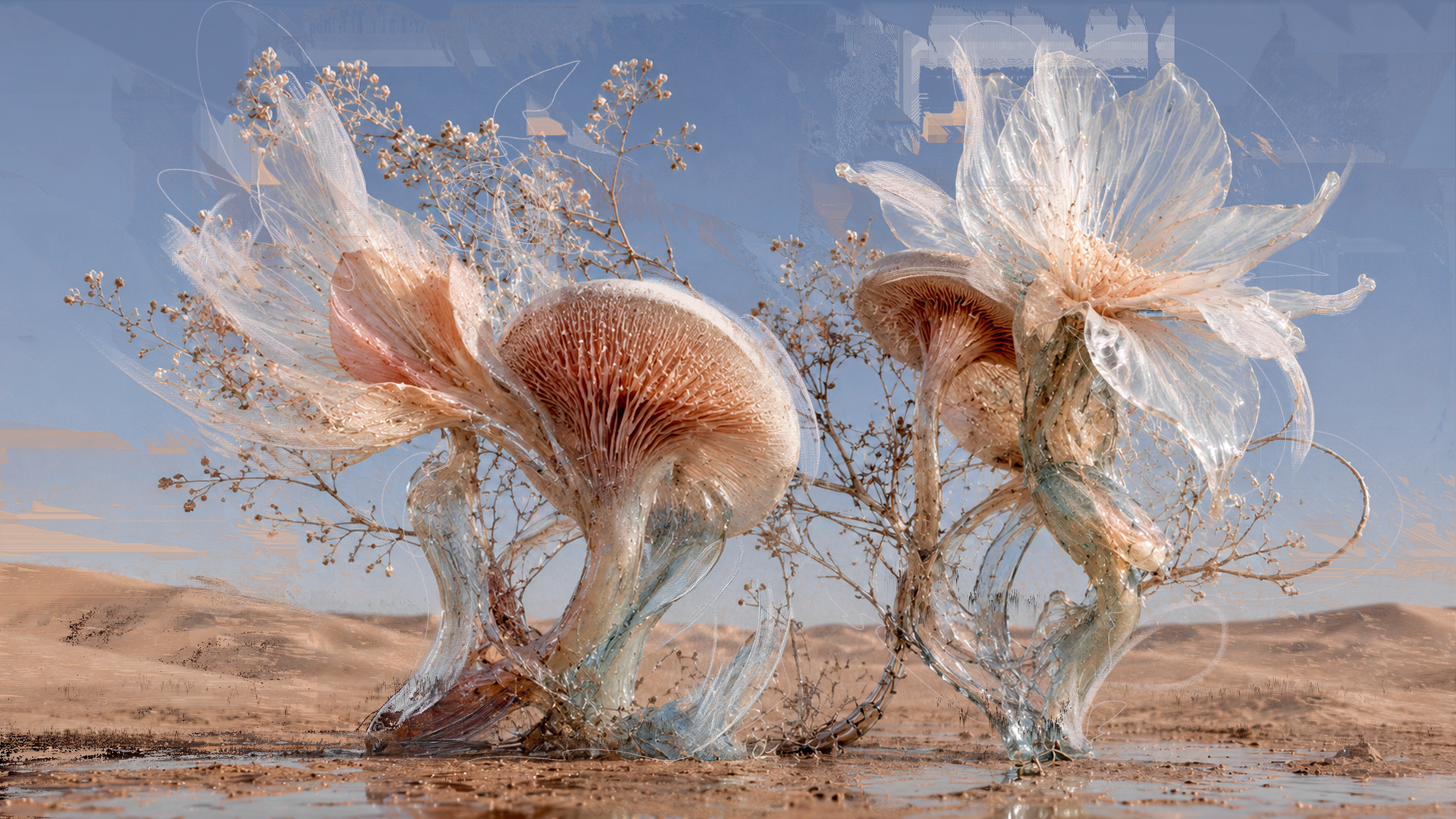
At one point, the process reached its marrow.
This is the key-shot.
It absorbs almost everything accumulated before: the extracted skeleton of Deep Fried Reality, the formal studies, the synthetic-biological drift, the generative layer, the painterly intention, and the calibrated glitch "accidents".
Here, the organic and the biological begin to braid themselves into the initial composition. The abstract charge starts acquiring a more tactile body. Still not grounded, not exactly earthly, but close enough to graze the idea.
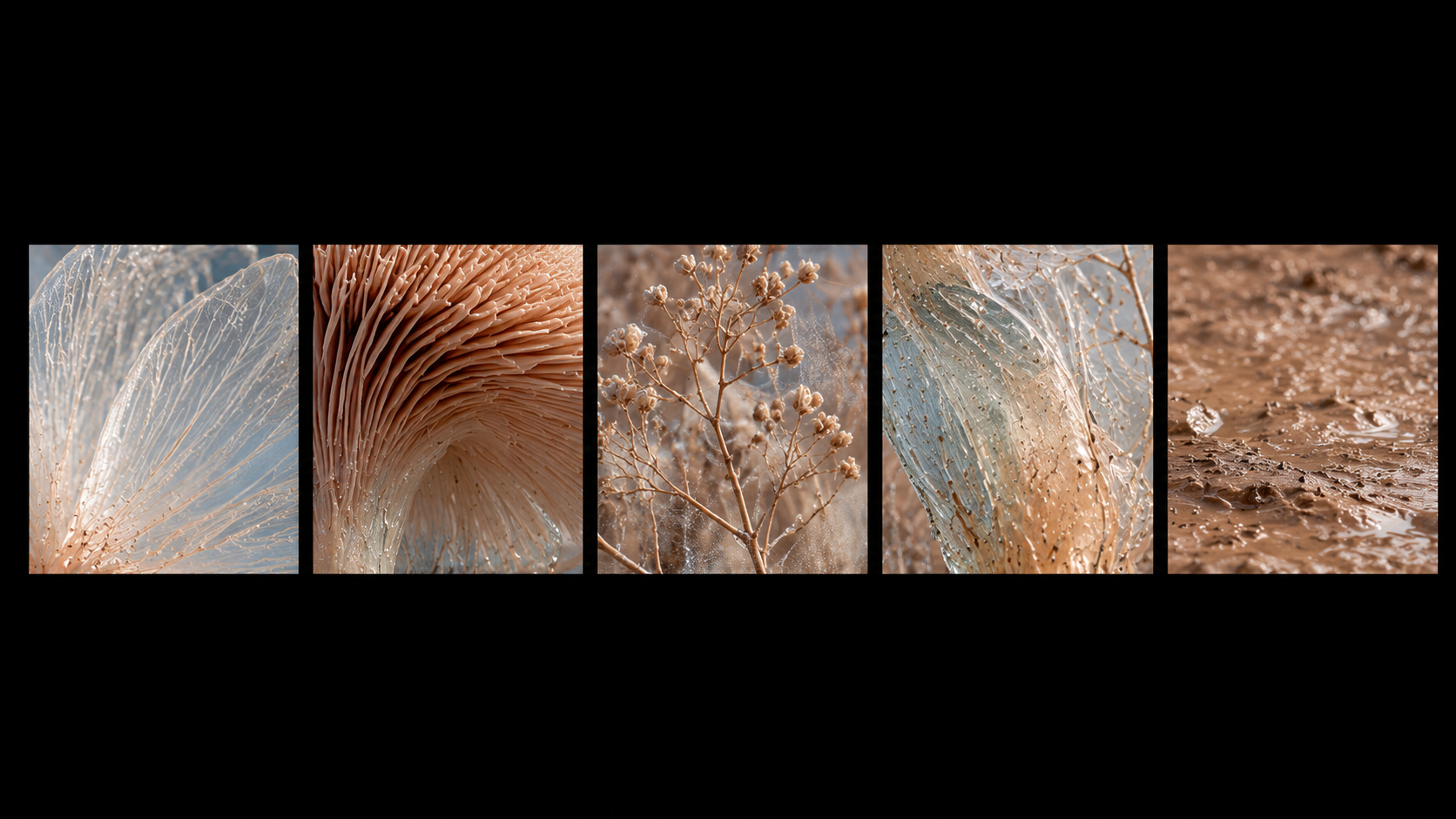
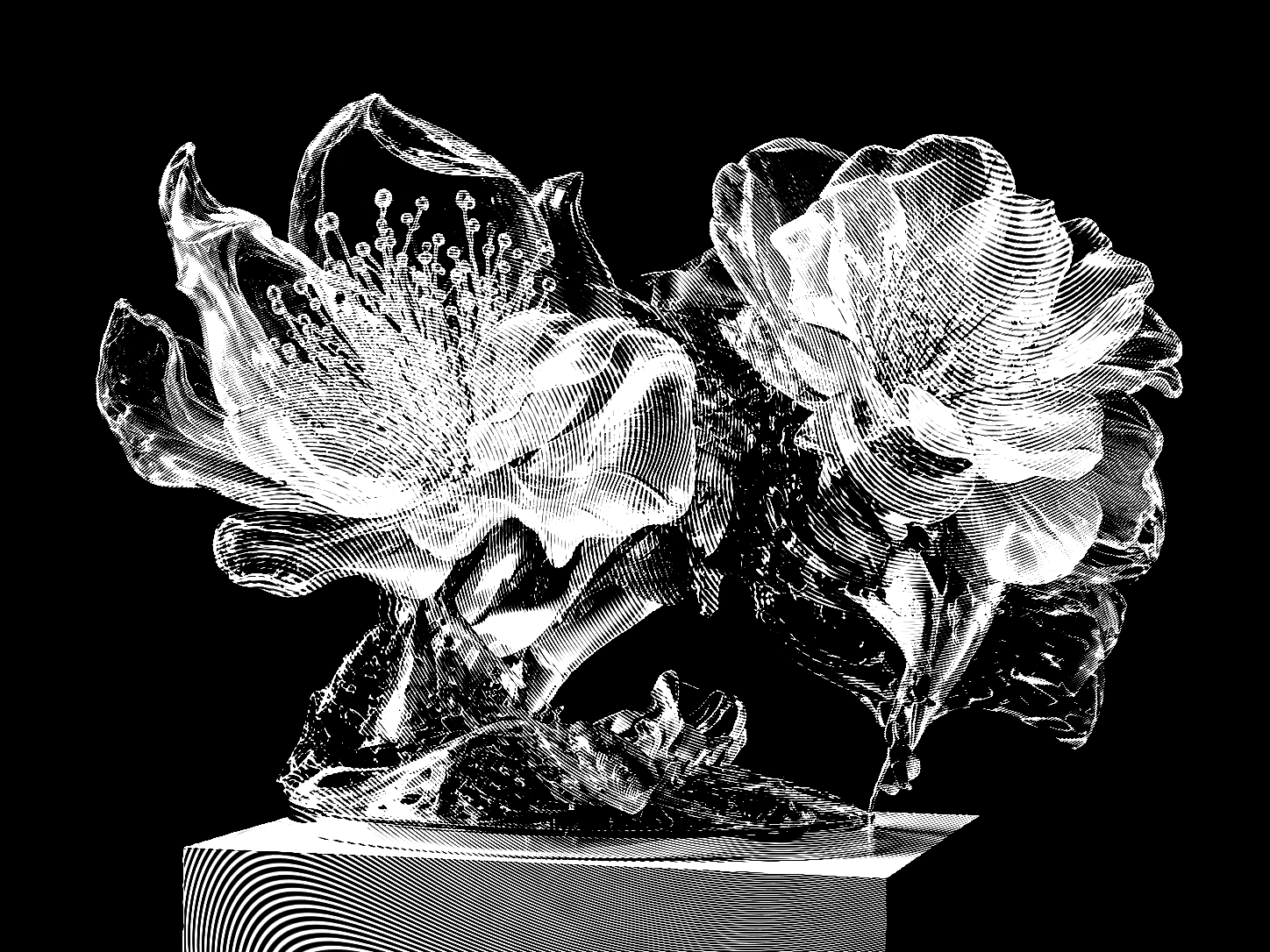
These texture and color studies form a visual sample bank for the rest of the project.
They extract the main material language of the work: synthetic biology, translucent surfaces, glitch residue, floral fragments, digital noise, and saturated chromatic interruptions. Some elements are used directly, while others appear through contrast, rhythm, or semiotic reference across the final visual system.
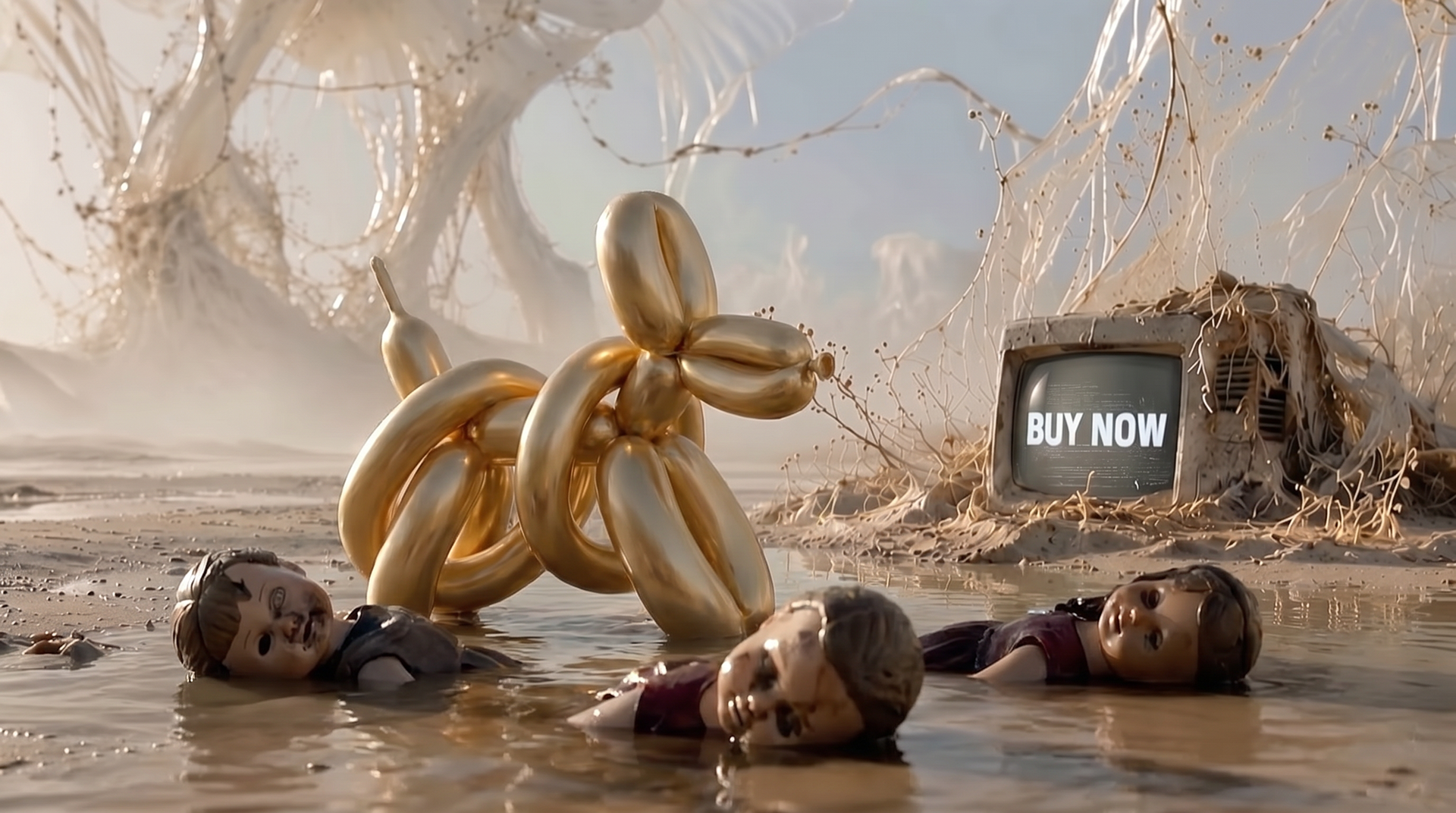
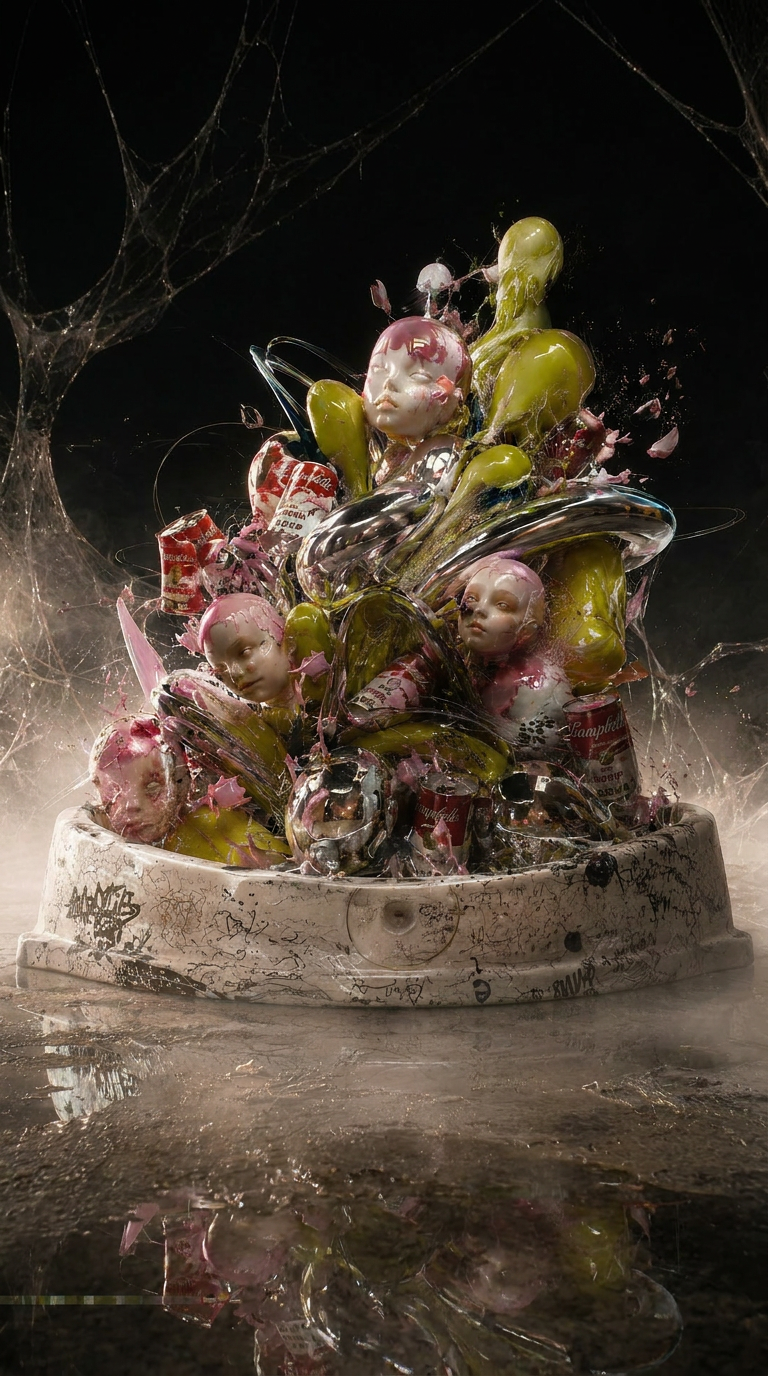
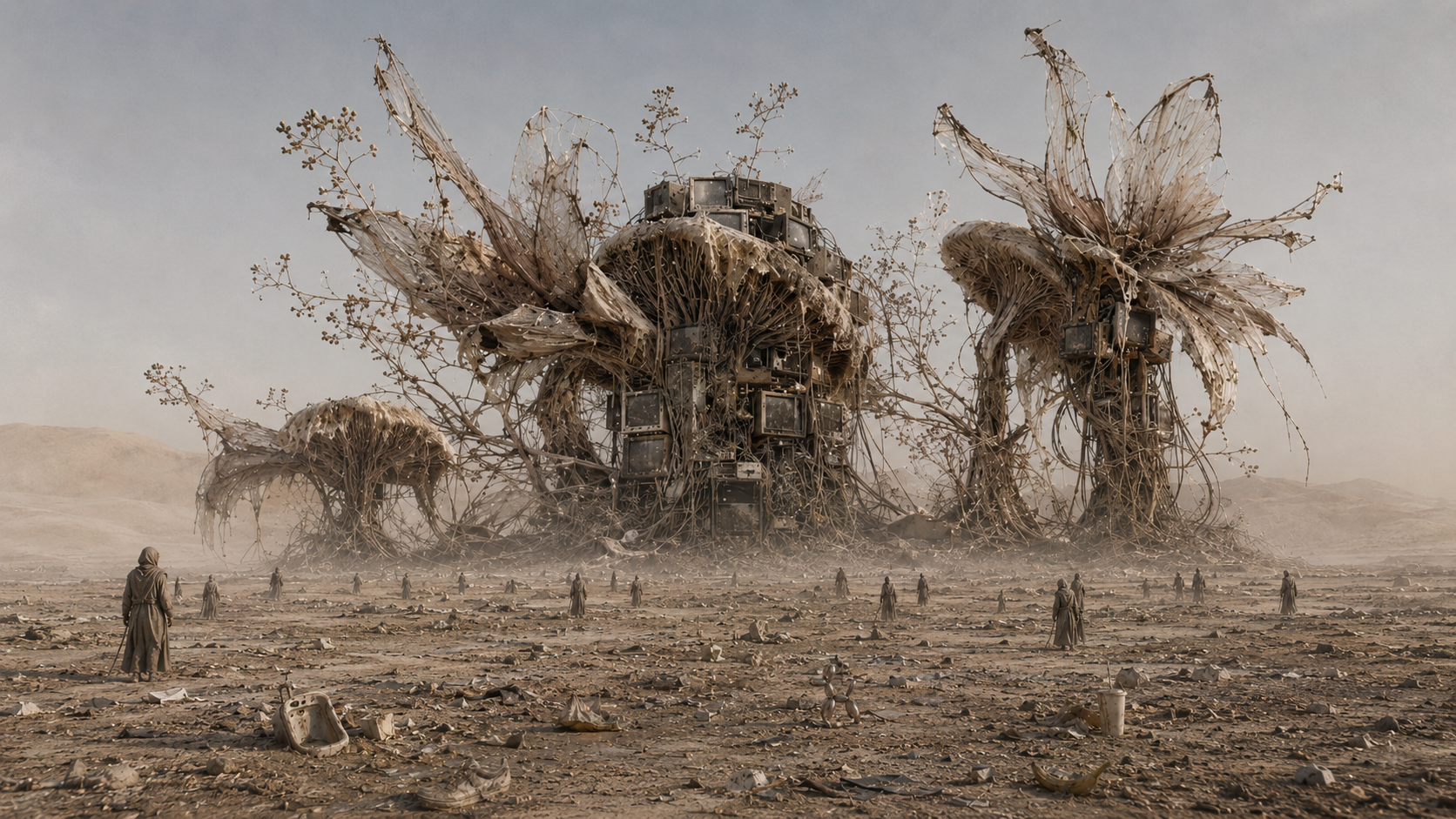
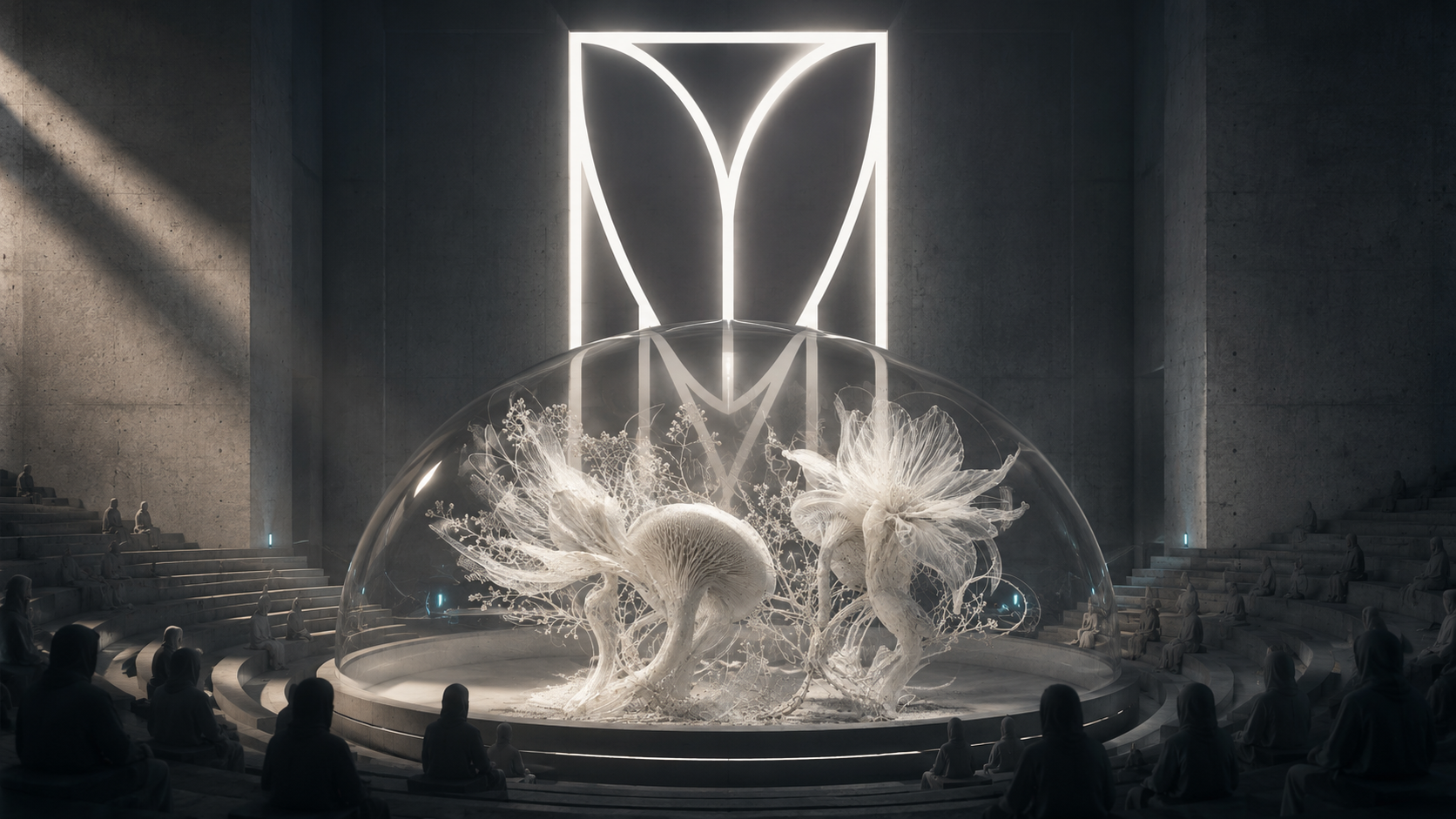
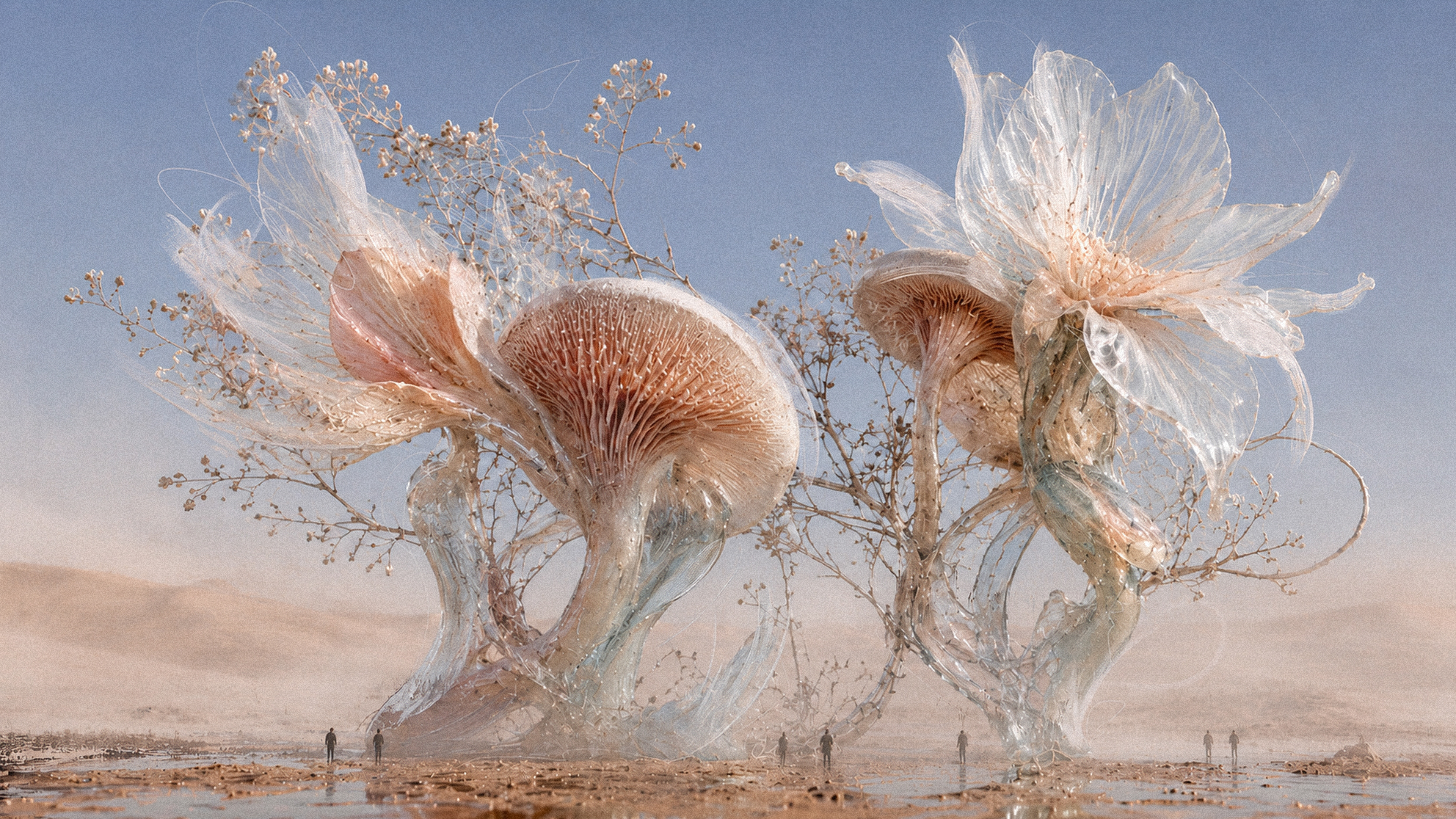
These key frames expand the project from form and texture study into speculative world-building.
The same visual language is tested across different conditions: commercial display, desert monumentality, sacred exhibition, synthetic biology, ruin, and cinematic fiction.