Curated by Sam Grittis
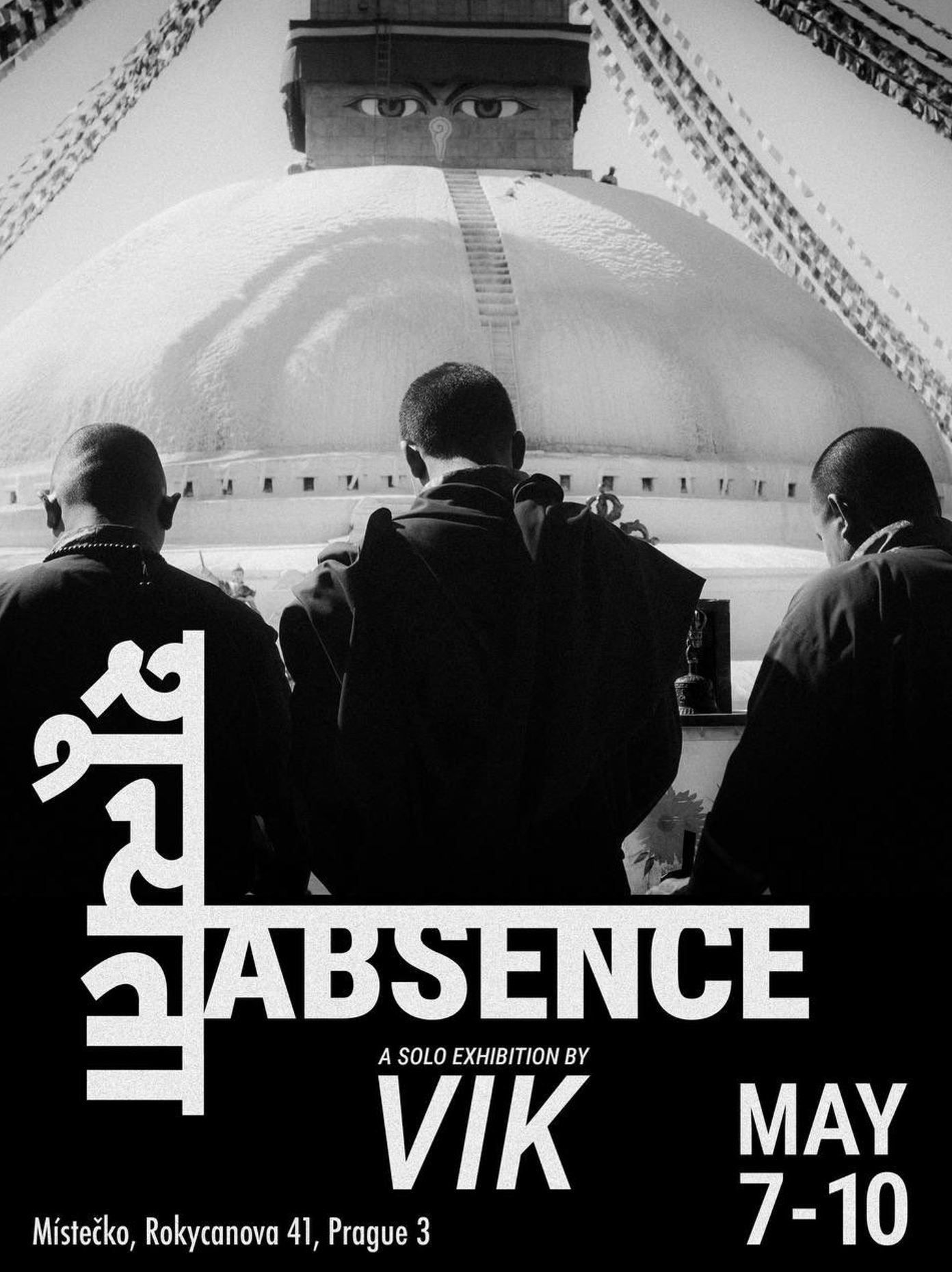
Místečko Gallery, Rokycanova 41, Prague 3
May 7 to 10, Prague
ABOUT VIK
Born in Nepal in 1985 and now based in Prague, VIK carries the sensitivity of someone formed between cities, villages, rituals, and distance. His photography begins from movement, from the edge of places that feel both foreign and intimate.
Working exclusively in black and white, with digital and analog camerasvintage lenses, he stays close to what unfolds naturally. His images avoid theatricality, tracing gestures, pauses, and the emotional weight carried by ordinary moments.
ABOUT ABSENCE
In the middle of something, but not quite caught in the act, there is an ethical lurking going on. It sits between the artist and the figural, in a deeply personal space. That is where I intuit the main subject of almost each work to be: the action being witnessed itself, before the individual with a name, surname, and ID number, before the natural topology, before the architectural and epistemological frame around it.
If I were to describe the internal mechanics of the artist’s modus operandi, I would place it somewhere close to a state of observation, rounded into a form of contemplation, a study of the present, one increasingly absent from collective consciousness.
INTERVIEW QUESTIONS
1. You describe your position as “an outsider’s gaze with an insider’s knowledge.” Before Prague, who were you in Nepal, personally and artistically? What were you doing there, why did you leave, and why Prague?
VIK: Having been away from home for many years, when I returned, I was looking at things very differently, as my gaze had gotten used to the European way. Almost like seeing something familiar but with an outsider’s gaze, while having deep knowledge about the place.
I was just beginning my journey with photography before I moved to Prague. After many years struggling with addiction, I finally got sober, found photography, took a two-month crash course, and started taking photos at bars. Later, I found work as a photojournalist in one of the online media companies.
I moved to Prague because I met my previous partner. We met in Nepal and wanted to live together, so I moved to the Czech Republic. I stayed in the countryside for a few years before we separated, and in 2021 I moved to Prague. Prague is a beautiful city, and inspired by Czech photographers such as Josef Sudek and Josef Koudelka, I wanted to document Prague like they did, but with my own understanding of the world and the way I see it.
2. What part of your artistic baggage from Nepal came with you to Prague? Did it stay the same, or did the city slowly reshape it?
VIK: People are something that has stayed with me since I started photography back in Nepal, and I still look for people in my frames, no matter where I shoot, whether it’s Prague or anywhere in Europe.
My practice of taking photos of people has completely changed, though. Back home in Nepal, I was taking very intimate and close portraits, and that changed living in Prague. Shooting from the margins, I keep my distance because the city allows me to include the architecture as part of my frame. My way of shooting did evolve as I play with more dead space, allowing light and shadow to be part of my storytelling while still having a person in the frame. But now, it’s not only about the subject, it is also about what is not in the frame.
3. After years in diaspora, what are some things you can no longer see with the same eyes? Can you point to one or two works in Absence where this shift is most visible?
VIK: This is something I find myself saying a lot: Nepal taught me feelings and simplicity, and Prague taught me depth, shadow, and light. So now, whenever I see a scene that I like, I not only see the subject and frame, I see light and shadow. I see geometry.
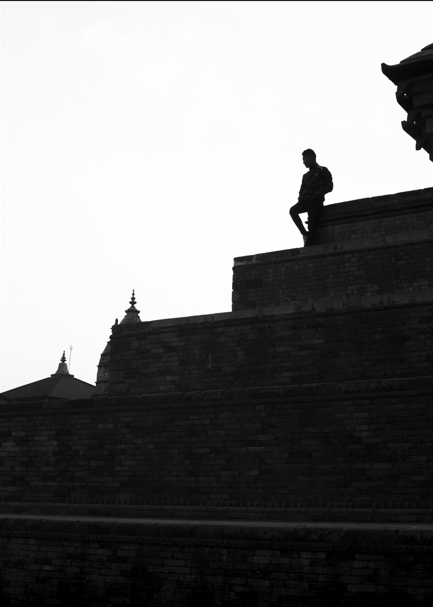
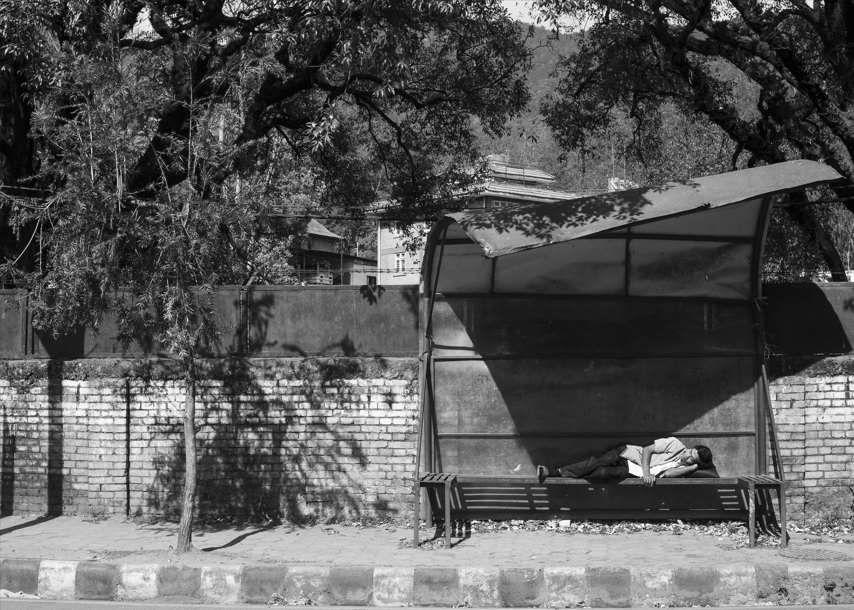
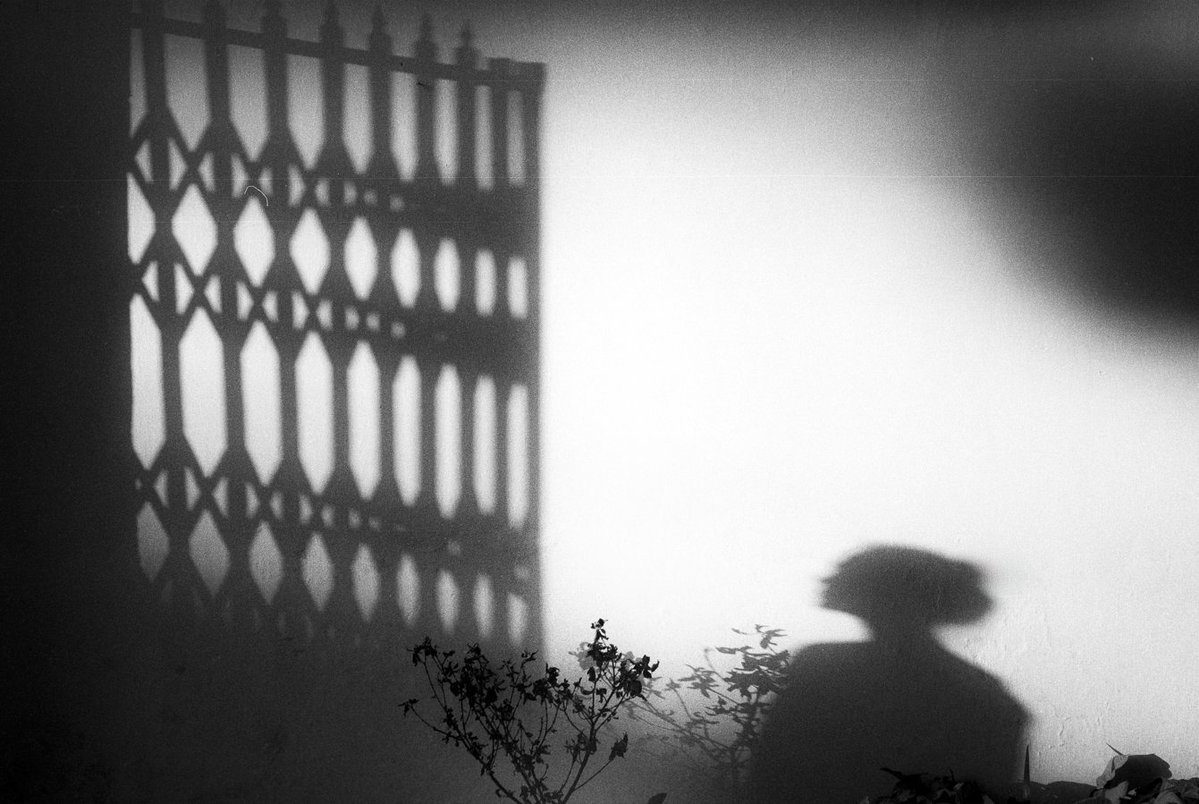
You will see this in a lot of pieces from Absence, but if I had to use just one or two pieces as examples, I would say Frame ११ and Frame १४, where you see examples of negative space, light, and shadow, but with a little closeness of shooting in my home country.
Frame ११. Frame 11. By the way, I titled all the pieces from Absence in Nepali numerals.
Frame १४. Frame 14.
4. You said: “Growing up in Nepal taught me simplicity. Living in Prague taught me depth.” What does simplicity mean for you, and what kind of depth did Prague add? VIK: When I say Nepal taught me simplicity artistically, I mean it taught me to be resourceful with what I had in terms of camera and gear. It taught me that compelling work can still come from where you are.
You just need to keep learning, keep looking, and keep going back to the streets. Not with new gear, but with new eyes.
What Prague gave me was depth. It added the finishing touches to what I was already doing. Through its light, shadows, architecture, and art, I began to understand atmosphere in a deeper way.
Looking back, I was still very raw in my practice, and Prague helped give me direction. It changed how I see scenes now and added more intention and emotional depth to the way I photograph.
5. Your black-and-white work often feels restrained, almost like the subject is left alone inside its own privacy. Is that minimalism a visual choice, a moral instinct, or just the way your eye works?
VIK: That is such a good analysis of my work. I would say my work feels restrained because it is observational rather than performative. There’s tension in it, but it’s quiet tension.
But also, it is a moral instinct. I like to do justice to the people I take photos of, and over the years this has become my visual language.
6. About Nepal’s Gen Z protests: what did it mean for you to witness such a major political moment in your country’s recent history? What struck you most?
VIK: I would say it had been coming after decades of heavy corruption, misuse of government funds and power, and making the country hollow from the inside out.
I felt a big sense of hope. For the first time in my lifetime, I felt now we have a chance to shape the country better, with better leadership, better people in power.
The thing that really struck me the most about the protest was how all the young people came together and took charge of their own destiny, raising important questions which the generation before couldn’t.
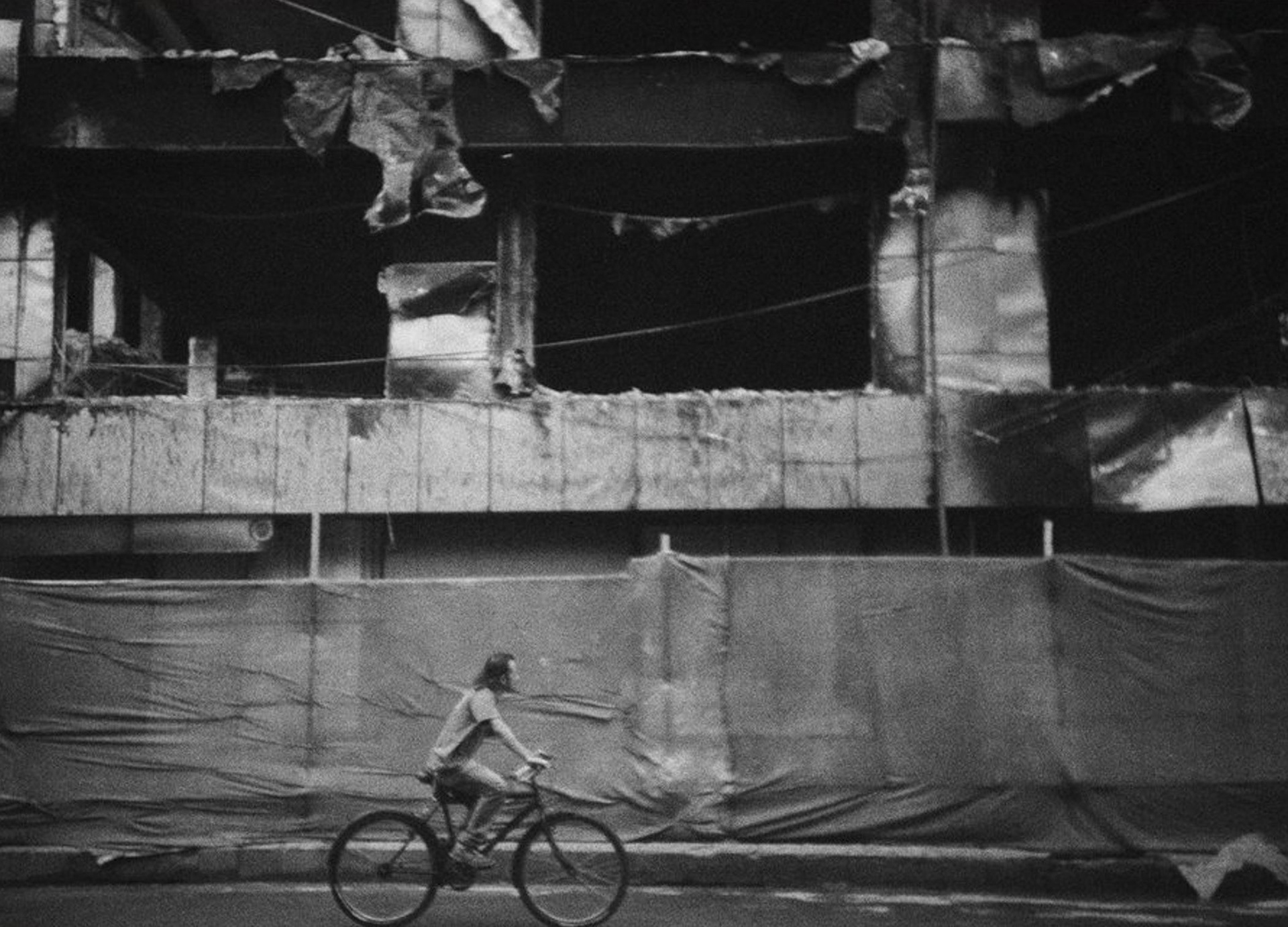
But also, one thing I would like to highlight is that even though a lot of government and public buildings were burnt, including the prime minister’s office and president’s residence, the people didn’t hurt a single tourist.
The people still showed humanity towards visitors, escorting them through tense areas. It goes to show the kindness of the Nepali people, what they are known for around the world.
A frame from the Absence exhibition, taken in Nepal after the protest, on my return to Nepal: a man on a bicycle rides past a burned shopping mall in Kathmandu city centre.
7. Did living in Prague, inside a European system with all its order, bureaucracy, and democratic privilege, change the way you looked at what was happening in Nepal?
VIK: Not at all. I think when people get fed up with a system that doesn’t work, a system that is not built for the people, it doesn’t matter where you are in the world or even where you come from. We all react the same because it’s part of being human.
One of the only things that kept popping up in my head was: I have to be there because I felt like I was missing out on documenting it. That’s the photojournalist in me.
8. You mention Josef Koudelka and Josef Sudek as influences. For the people who want to geek out a little: what did you take from each of them, technically or conceptually?
VIK: There are so many artists and photographers that I am inspired by, even the chiaroscuro of Caravaggio, and my work is shaped by all of them, including my own eye.
But living in Prague, I was highly drawn to the work of these specific Czech photographers. Josef Sudek, also known as “the poet of Prague,” with his atmospheric, neo-romantic black-and-white images.
I love how he photographed silence, fog, loneliness, windows, rain, empty space, light as emotion, and the feeling of existing quietly inside a city.
Whereas Josef Koudelka brings out the humanistic and poetic style, characterized by stark black-and-white contrasts and powerful, often desolate compositions, which you find in a lot of my work too.
9. Can you point to one work in Absence where we can feel Koudelka’s influence, and one where Sudek’s influence is closer to the surface?
STRAKTS: Editorial Note: Vik Challenged me to find these influences through this body of work.
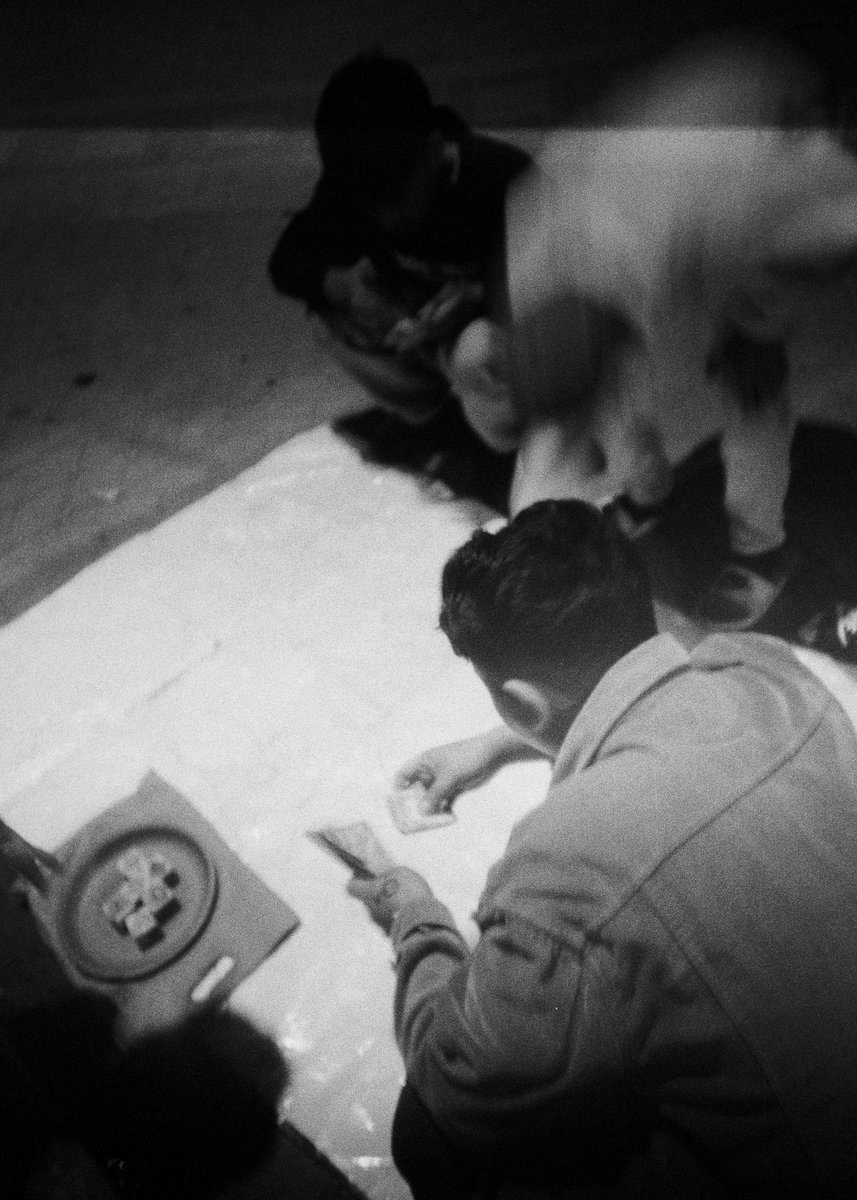
Josef Koudelka: Influence No. 8, subject matter and composition.
Josef Sudek: 18. It is like an ode to him. For me, it is the romantic definition of the concept of Absence behind the collection. The subject is outside the frame, meaning absent. What is caught in the photograph is only the shadow as presence, the shadow which is actually the absence of light. Romantic. Poetic. Full circle.
10. I keep seeing reconciliation in work lately, maybe because that is what I am also trying to put into the world. Does Absence speak about reconciliation between the past and the future?
VIK: Yes, but not in a literal or planned way. Absence sits in that tension, but I wouldn’t describe it as a clean reconciliation between a romanticized past and a hyper-imagined future. It’s more unstable than that.
The past, for me, is never fully “past.” It returns as fragments, feelings, and partial images.
And the future is not something clearly imagined either; it’s something I approach through observation, through trying to understand where I am now.
What the work really deals with is the space in between those two states, where memory is not reliable and imagination is not fully formed yet.
Absence is also what is not in the frame as much as what is. The things we say out loud and the things we keep hidden.
Absence is not emptiness. It is where the image begins.
So if there is reconciliation, it’s not resolved. It’s ongoing. It happens in the act of photographing itself.